

The World Sample
Lately the IMF has:
- Efficiently pressured El Salvador to (de facto) drop Bitcoin as authorized tender, and rollback different Bitcoin insurance policies
- Efficiently pressured CAR’s 2023 Bitcoin repeal via regional banking our bodies
- Been chargeable for the dearth of observe via from Bitcoin marketing campaign rhetoric to motion from Milei in Argentina.
- Cited “serious concerns” with Pakistan’s Bitcoin plans
- Constantly framed crypto as a “risk” in mortgage negotiations
Right here’s a abstract
| Nation | GDP ($ Billion) | IMF Mortgage ($ Billion) | IMF Mortgage as % of GDP | IMF response | Consequence |
| Argentina | 670 | 54.8 | 8.18% | strong | Bitcoin coverage deserted |
| Central African Republic | 2.56 | 0.272 | 2.31% | strong | Bitcoin coverage deserted |
| El Salvador 2.0 (post-2025) | 34.87 | 1.4 | 4.01% | strong | 5 Bitcoin legal guidelines deserted |
| Pakistan | 346.79 | 9.35 | 2.70% | strong | TBD |
| El Salvador 1.0 (2021-2024) | 34.87 | 0 | 0% | strong | Bitcoin maintained |
| Bhutan | 2.9 | 0 | 0% | mild | Bitcoin maintained |
As we are able to see, the one nations that had been in a position to withstand IMF strain had been El Salvador, previous to gaining an IMF mortgage, and Bhutan which doesn’t have an IMF mortgage.
Every nation with an IMF mortgage who has adopted, or tried to undertake Bitcoin at a nation-state stage has been efficiently thwarted, or largely thwarted by the IMF.
How is it that the IMF has been so profitable in stopping international nation state adoption, except for Bhutan, and why do they aggressively transfer to stop it?
On this detailed report we do a deep-dive into every of the three nations the place the IMF has efficiently pushed again in opposition to Bitcoin adoption, and the indicators that it’s possible to achieve success attaining the identical consequence with Pakistan.
Within the final part of this report, we have a look at the IMFs 5 causes to worry Bitcoin, and the way Bitcoin continues to be thriving from a grassroots stage regardless of top-down Bitcoin abandonment, or partial abandonment, by varied nation states.
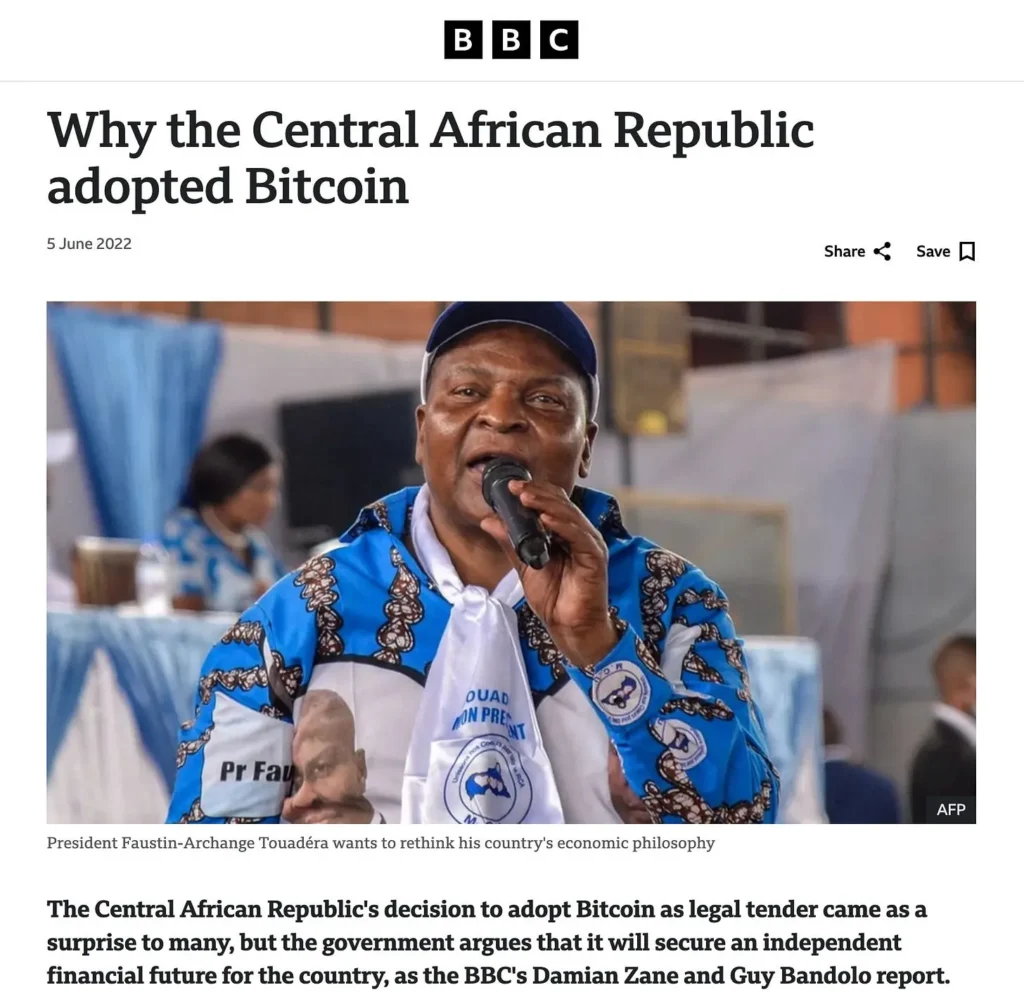
The Central African Republic (CAR) makes use of the CFA franc. The CFA isn’t simply forex—it’s a geopolitical chain, backed by France and ruled by the Financial institution of Central African States (BEAC). Of its 14 member nations, the 6 Central African nations (together with CAR) should nonetheless deposit 50% of overseas reserves in Paris.
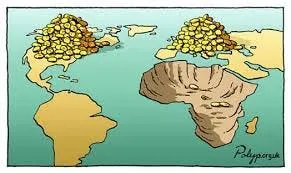
This management over reserves fosters economic dependency, whereas establishing export markets for French goods at favorable phrases. In 1994 for instance, the CFA was devalued by half, a coverage that was influenced by Western strain, significantly from the IMF. This induced the price of imports to leap, resulting in exporters (primarily EU based mostly) with the ability to procure assets from CFA nations at half the price. Domestically the affect was devastating, resulting in wage freezes, layoffs, and widespread social unrest across CFA countries.
When the Central African Republic (CAR) introduced in 2022 it was adopting Bitcoin as authorized tender, BEAC and its regulatory arm COBAC instantly voided the legislation, citing violations of the CEMAC Treaty; The treaty which established the financial and financial neighborhood of Central Africa. This wasn’t forms—it was a warning shot from the financial guardians of la Françafrique.
Why it mattered: To today, CAR’s economic system depends closely on IMF bailouts. With $1.7Billion in exterior debt (61% of GDP), defying BEAC meant risking monetary isolation.
The IMF’s Silent Marketing campaign
The IMF moved quick. Inside two weeks (Could 4, 2022), it publicly condemned CAR’s “risky experiment,” citing authorized contradictions with CEMAC’s crypto ban. The transfer raised “major legal, transparency, and economic policy challenges,” the IMF said, that had been much like the issues the IMF raised about El Salvador’s Bitcoin adoption: dangers to monetary stability, client safety, and financial liabilities. (For context, none of these dangers materialized in El Salvador).
However their actual weapon was leverage. As CAR’s largest creditor, the IMF tied its new Prolonged Credit score Facility (ECF)—a $191M lifeline—to coverage compliance.
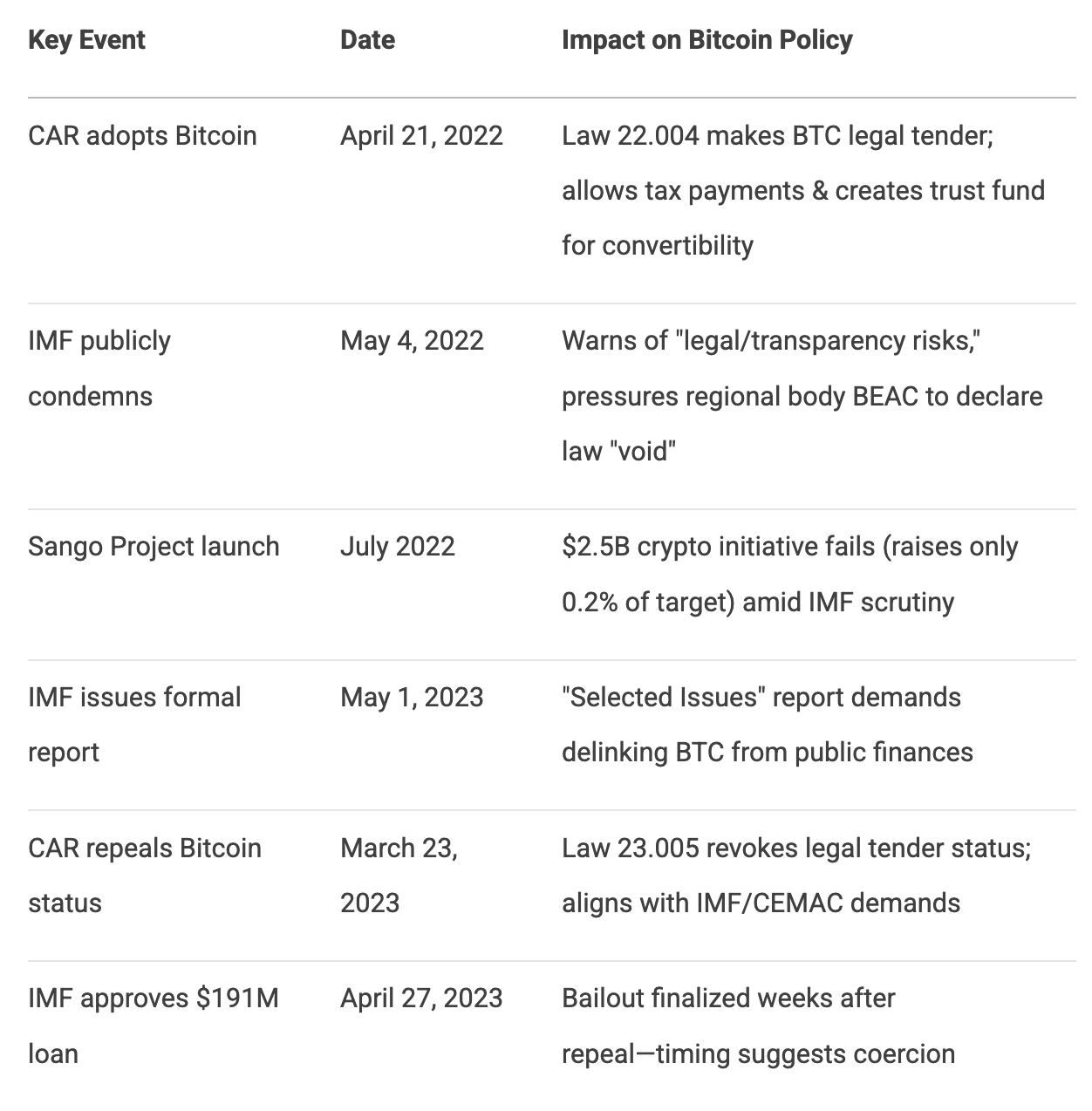
The Timeline That Tells All
This desk traces the IMF’s shadow marketing campaign:
Key to scuttling CAR’s Bitcoin ambitions was guaranteeing that the Sango project — a blockchain-hub initiative from the CAR authorities to promote “e-residency” and citizenship for $60K in Bitcoin — didn’t proceed.
The Sango Mission – coincidence or collusion?
In July 2022, CAR launched the Sango Mission. It aimed to boost $2.5B (100% of GDP).
It failed catastrophically. By January 2023, solely $2M (0.2% of goal) was raised. Whereas IMF experiences cite “Technical obstacles with 10% internet penetration” as the explanation for the failure, our evaluation reveals a special image. Two components scuttled the mission.
- Investor flight
- A CAR Supreme Court docket ruling formally blocked the Sango mission
Nevertheless, on nearer examination, each of those components trace at IMF involvement.
Let’s take a more in-depth have a look at the proof.
Investor Flight
The IMF’s position on this investor flight is circumstantial however compelling. On Could 4, 2022, the IMF expressed concerns about CAR’s bitcoin adoption, stating it raised main authorized, transparency, and financial coverage challenges. This assertion, made earlier than the Sango Mission launch, highlighted dangers to monetary stability and regional financial integration, probably deterring traders. Additional, in July 2022, throughout a workers go to for the Workers-Monitored Program (SMP) assessment, the IMF famous “economic downturns due to rising food and fuel prices”, which might have compounded investor caution. Experiences additionally point out that the IMF and COBAC warned of inherent risks in CAR’s crypto transfer, including to the skepticism.
The timing of those IMF statements aligns with the noticed investor flight, suggesting that their cautionary stance might have influenced perceptions. Whereas circumstantial, the sequence of occasions suggests IMF affect as a revered monetary establishment within the investor neighborhood possible performed a job in investor flight.
Supreme Court docket Ruling
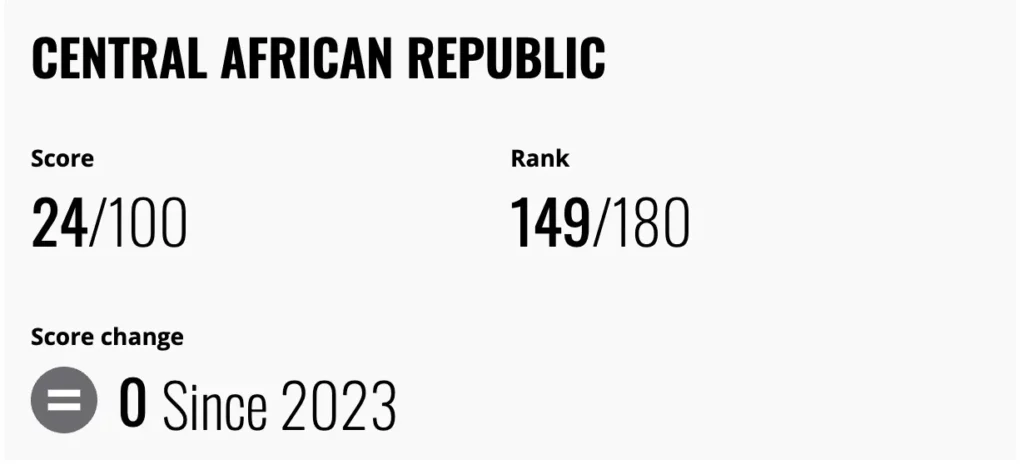
On the floor, the Supreme Court docket ruling seems to be like an impartial occasion, till we dig beneath the floor and discover massive question-marks over the independence of CAR’s judiciary, a rustic that itself ranks 149/180 on its Corruption Perception Index (extraordinarily low).
As talked about, one week after CAR introduced its Bitcoin technique, the IMF reported “concerns”, together with dangers to monetary stability, transparency, anti-money laundering efforts, and challenges in managing macroeconomic insurance policies because of the volatility. (Bloomberg, 4 May, 2022)
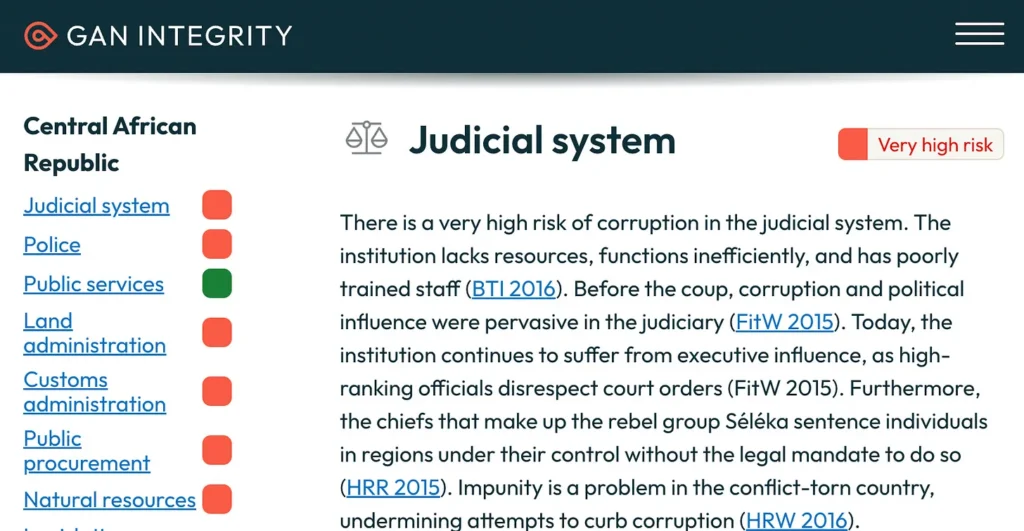
On 29 Aug 2022, 117 days later, the Supreme Court docket of CAR dominated that the Sango mission was unlawful. For context, the Supreme Court docket which types a part of CAR’s judiciary is described by worldwide transparency our bodies reminiscent of Gan Integrity as some of the corrupt establishments within the nation, with proof pointing to inefficiency, political interference, and sure affect from bribes or political pressure.
The Sango mission’s collapse turned the IMF’s Exhibit A: “Proof Bitcoin can’t work in fragile economies.” However the actuality was, the IMF’s constant expression of “concerns” created the surroundings the place the mission was structurally undermined prematurely, in order that this conclusion turned potential.
5,200 miles away, within the small nation of Bhutan we see the stark distinction of the profitable Bitcoin rollout that was potential with out IMF’s “involvement”.
The Unstated Conclusion: Bitcoin’s Resilience Past Borders
CAR’s reversal wasn’t about Bitcoin’s viability. It was about uncooked energy. The IMF weaponized regional banking unions (CEMAC), starved CAR of capital, and leveraged a $191M mortgage to extinguish the specter of monetary sovereignty. When the Sango Mission struggled—the lure snapped shut.
But this defeat reveals Bitcoin’s enduring energy. Discover what the IMF didn’t destroy:
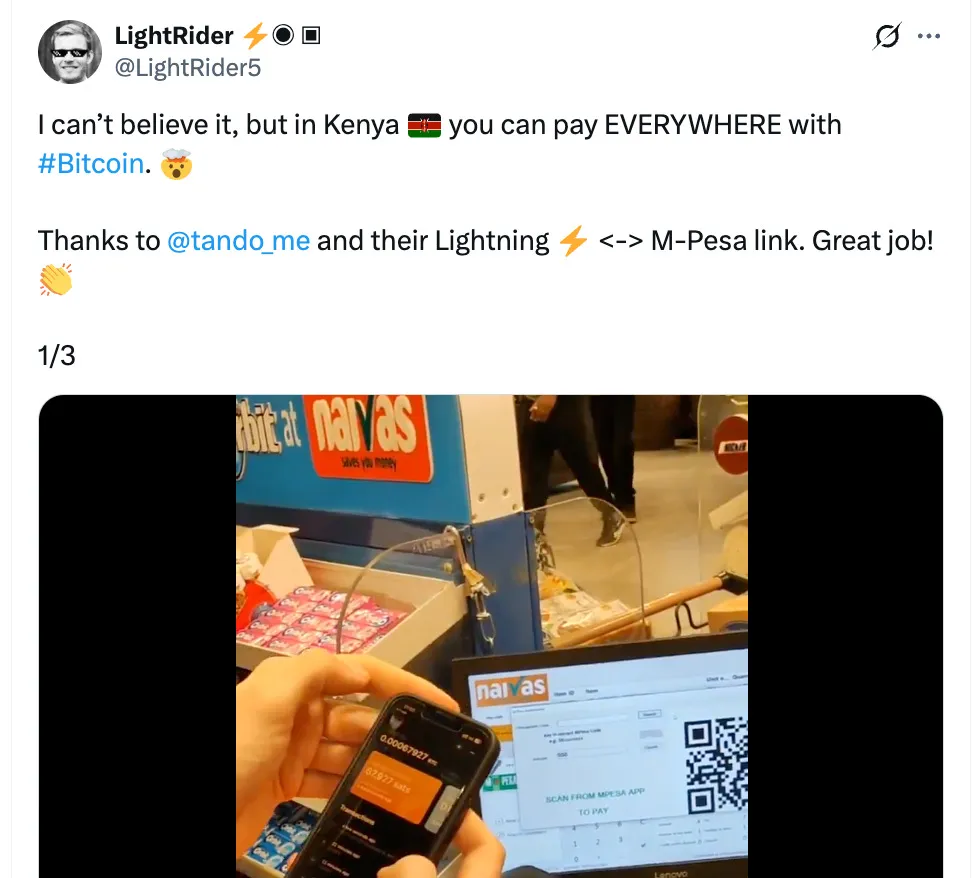
The sample is evident: The place grassroots adoption takes root—Bitcoin survives. However for nations saying top-down Bitcoin manifestos who’ve giant IMF loans, all 4 have met with crushing ranges of resistance: El Salvador, CAR, Argentina and now Pakistan.
CAR’s excellent $115.1 million IMF mortgage stability made it susceptible to heavy IMF strain. In nations with out IMF loans reminiscent of Bhutan, Bitcoin slips via the IMF’s grip. Each peer-to-peer cost, each Lightning transaction, erodes the previous system’s foundations.
The IMF received the CAR spherical. However the international combat for monetary sovereignty is simply starting.
If CAR was thwarted in its Bitcoin plans, Argentina by no means made it to the beginning line. Precampaign rhetoric from President Milei advised massive issues had been in retailer for Bitcoin. But nothing materialized. Was this only a politician’s rhetoric petering out post-election, or was one thing else at play? This part pulls again the lid on what actually occurred to Argentina’s aborted Bitcoin aspirations.
Understanding how Bitcoin adoption goes, is like assessing whether or not a rocket goes to achieve escape velocity: we should have a look at each the thrust and drag components.
My intention is that this text is the place the place we are able to objectively assess not solely the optimistic top-down and grass-roots adoption tales (thrust), but additionally the robust oppositional forces to adoption (drag) that seldom get mentioned, not to mention analyzed both on Bitcoin Twitter, or at Bitcoin conferences. One main drag has been environmental FUD, however there may be an arguably even larger one: main establishments that may use their present debt-entrapment of countries as leverage to stop Bitcoin adoption.
I’m an optimist: I consider Bitcoin will win: it’s so clearly a greater resolution to the damaged cash legacy system we at the moment have. However I’m additionally a realist: I believe most individuals underestimate the power of entrenched forces which oppose Bitcoin.
After I was working my tech company, we encountered the identical factor. Our know-how was 10x higher, quicker and more economical than the legacy system we ultimately changed. However they didn’t relinquish their incumbent monopoly simply!
What occurred in Argentina?
When libertarian Javier Milei was elected Argentina’s president in November 2023, many Bitcoin advocates cheered. Right here was a frontrunner who referred to as central bankers “scammers,” vowed to abolish Argentina’s central financial institution (BCRA), and praised Bitcoin as “the natural reaction against Central Bank scammers.” The case turned a litmus check for whether or not Bitcoin might achieve mainstream acceptance via authorities adoption slightly than grassroots progress.
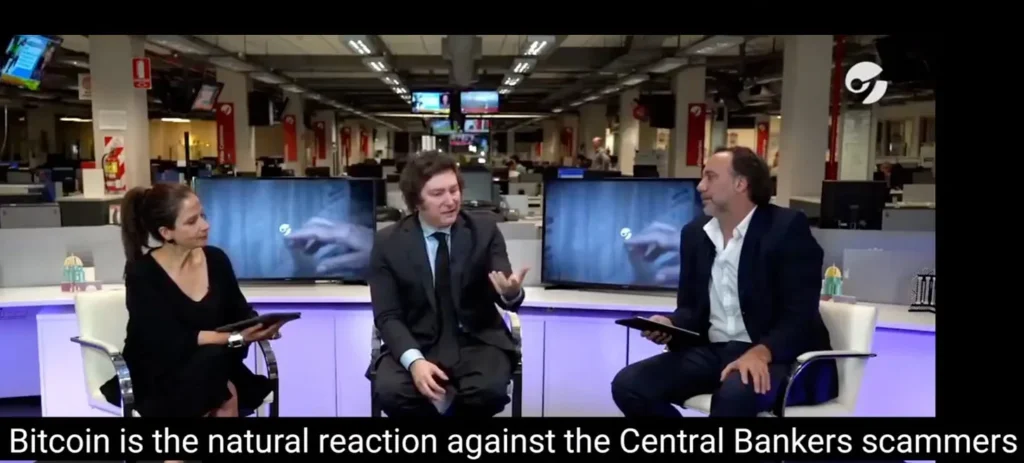
Supply: Coinsprout. 14 Aug 2023
But eighteen months into his presidency, Milei’s Bitcoin imaginative and prescient stays unfulfilled. The explanation? A $45 billion leash held by the Worldwide Financial Fund.
The IMF’s Bitcoin Veto in Argentina
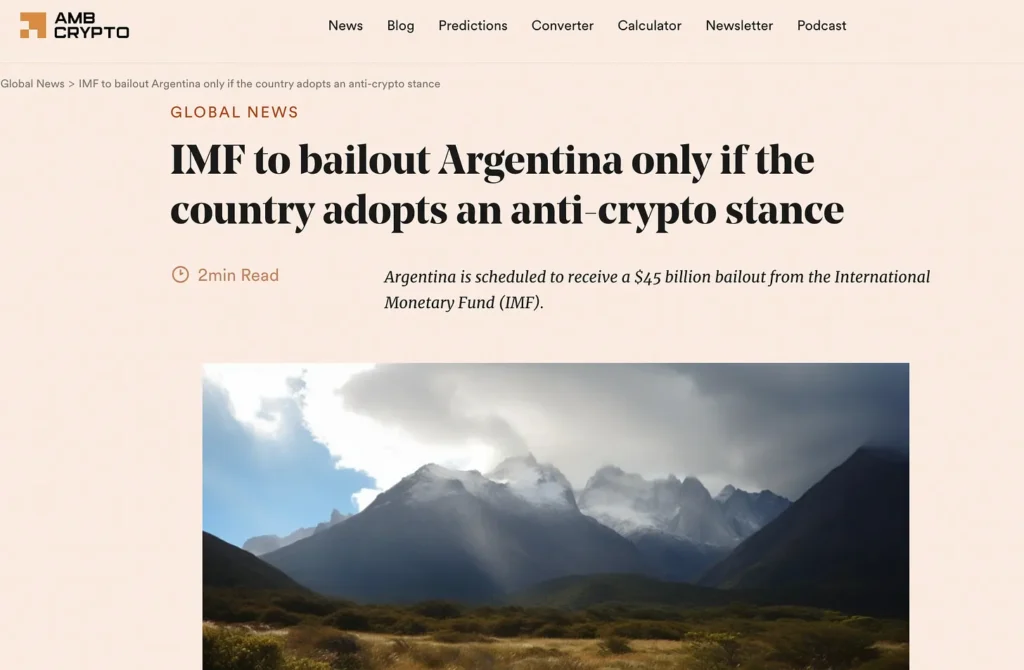
The constraints had already been put in place by the point of Milei’s election. On 3 March, 2022, Argentina’s earlier authorities signed a $45 billion IMF bailout settlement. Within the weeks following, particulars emerged that the settlement had contained an uncommon clause: a requirement to “discourage cryptocurrency use.” This wasn’t a suggestion—it was a loan condition documented within the IMF’s Letter of Intent, citing issues about “financial disintermediation.”
The rapid impact:
- Argentina’s central financial institution banned monetary establishments from crypto transactions (BCRA Communication A 7506, Could 2022)
- The coverage stays enforced below Milei, regardless of his pro-Bitcoin rhetoric
Milei’s Pivot
After taking workplace, Milei:
✔ Slashed inflation from 25% month-to-month to below 5% (Could 2024)
✔ Lifted forex controls (April 2025)
✔ Secured a brand new $20 billion IMF deal (April 2025)
However his manifesto’s flagship proposals—Bitcoin adoption and abolition of BCRA (Argentina’s Central Financial institution) — are conspicuously absent. The maths explains why: Argentina owes the IMF greater than every other nation, giving the Fund unparalleled leverage.
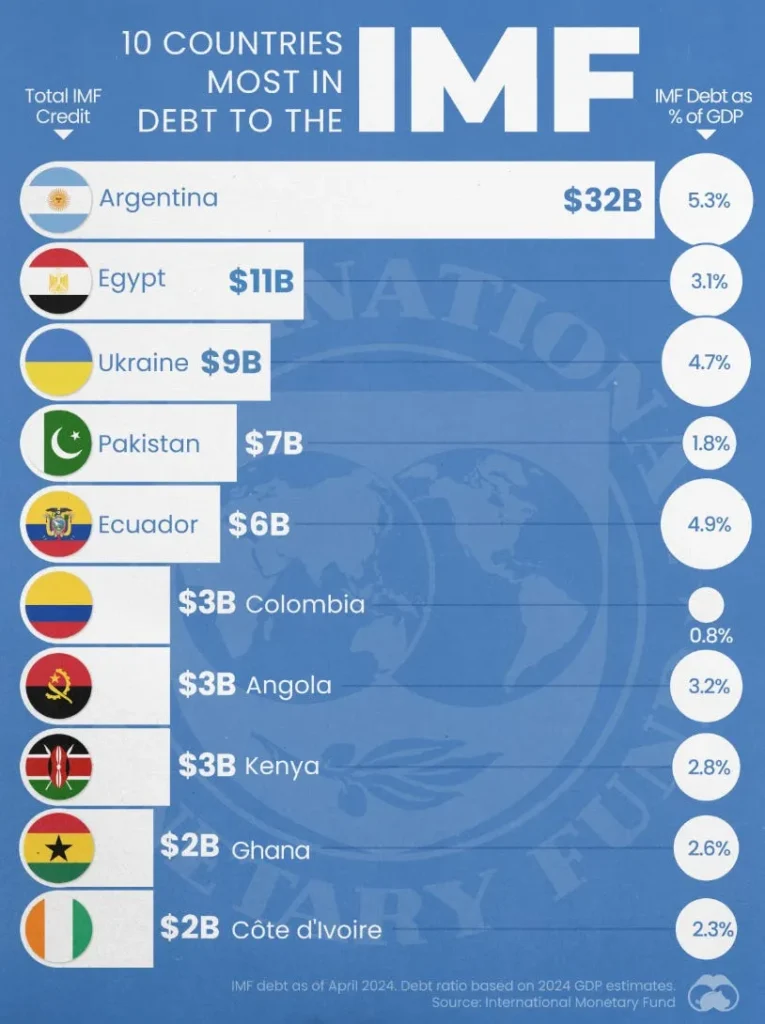
But there’s irony in Argentina’s case: whereas the IMF blocks official Bitcoin adoption, Argentinians are embracing Bitcoin anyway. Cryptocurrency ownership grew by 116.5% between 2023-2024 in South America.
Throughout the area, Argentina has the very best possession charges, at 18.9%, a determine nearly 3 times the global average, and which has surged as residents hedge in opposition to excessive annual inflation of 47.3% (April 2025) — a quiet revolt the IMF can’t management.
.
What Comes Subsequent?
All eyes are on the October 2025 mid-term elections. If Milei features legislative help, he might check the IMF’s purple traces. However for now, the lesson is evident: when nations borrow from the IMF, their financial sovereignty comes with strings connected.
Key Takeaways
- The IMF’s 2022 mortgage explicitly tied Argentina’s bailout to anti-crypto insurance policies
- Milei has prioritized financial stabilization over Bitcoin advocacy, to take care of IMF help
- Parallels exist in El Salvador, CAR and now Pakistan revealing a constant IMF playbook
- Argentinians are circumventing restrictions via grassroots Bitcoin adoption

When El Salvador made Bitcoin authorized tender in 2021, it wasn’t simply adopting a cryptocurrency—it was declaring monetary independence. President Nayib Bukele framed it as a revolt in opposition to greenback dominance and a lifeline for the unbanked. Three years later, that revolt hit a $1.4 billion roadblock: the IMF.
The Worth of the Bailout
To safe its 2024 mortgage, El Salvador agreed to dismantle key pillars of its Bitcoin coverage. The circumstances reveal a scientific unwinding:
- Voluntary Acceptance Solely
Companies are now not required to simply accept Bitcoin (2021 mandate repealed). source - Public Sector Ban
Authorities entities prohibited from Bitcoin transactions or debt issuance. This contains bans on tokenized devices tied to Bitcoin. source - Bitcoin Accumulation Freeze
All authorities purchases halted (6,000+ BTC reserve now frozen)
Full audit of holdings (Chivo pockets, Bitcoin Workplace) by March 2025. source - Belief Fund Liquidation
Fidebitcoin (conversion fund) to be dissolved with audited transparency. source - Chivo Pockets Phaseout
The $30 incentive program winds down after surveys confirmed most customers traded BTC for USD. source - Tax Cost Rollback
USD turns into the only possibility for taxes, eliminating Bitcoin’s utility as sovereign cost. source
Bukele’s Calculated Retreat
El Salvador’s compliance makes fiscal sense:
- The mortgage stabilizes debt (84% of GDP) as bond funds loom
- Dollarization stays intact (USD nonetheless major forex)
But the backtrack is hanging given Bukele’s 2021 rhetoric. The Chivo pockets’s low uptake possible made concessions simpler.
What’s Left of the Experiment?
The IMF hasn’t killed Bitcoin in El Salvador—simply official adoption. Grassroots use persists:
- Bitcoin Seashore (native round economic system) nonetheless operates, in truth thrives
- Tourism attracts rising numbers of Bitcoin lovers
However with out state help, Bitcoin’s position probably shrinks to a distinct segment software slightly than a financial revolution, a minimum of within the quick time period.
The Street Forward
Two eventualities emerge:
- Gradual Fade: Bitcoin turns into a vacationer curiosity as IMF circumstances take full impact
- Shadow Revival: Non-public sector retains it alive regardless of authorities retreat
One factor’s clear: when the IMF writes the checks, it additionally writes the principles.
Key Takeaways
- IMF mortgage compelled El Salvador to reverse 6 key Bitcoin insurance policies
- Precedent set for different nations searching for IMF help
- Grassroots Bitcoin use might outlast authorities involvement
El Salvador made lots of Bitcoin concessions. Whereas arguably this doesn’t damage El Salvador a lot, it sends a robust message to different LATAM nations reminiscent of Ecuador and Guatemala who had been watching El Salvador and pondering of copying their playbook (till they checked the scale of the IMF mortgage that they had). So on web stability it was a partial IMF win, a partial El Salvador win.

We are actually 2 years into Bhutan’s Bitcoin experiment.
Which means we now have some good knowledge on the way it has affected the economic system.
The IMF warned that nations embracing Bitcoin would destabilize their economic system, be much less efficient at attracting overseas direct funding, and endanger their decarbonizing and environmental initiatives. It particularly voiced issues over Bhutan’s “lack of transparency” with crypto-adoption.
What does the information say?
1. The bitcoin reserves have instantly addressed urgent fiscal wants. “In June 2023, Bhutan allocated $72 million from its holdings to finance a 50% salary increase for civil servants”
2. Bhutan was capable of “use Bitcoin reserves to avert a crisis as foreign currency reserves dwindled to $689 million”
3. Prime Minister Tshering Tobgay in an interview stated that bitcoin additionally “supports free healthcare and environmental projects”
4. Tobgay additionally stated their Bitcoin reserves helped in “stabilizing [the nation’s] $3.5 billion economy”
5. Unbiased analysts have now stated that “this model could attract foreign investment, particularly for nations with untapped renewable resources”
Contemplating how the IMF evaluation was not simply unsuitable, however roughly 180° astray, it begs the query, had been the IMF’s predictions ever based mostly on knowledge?

“Get all your friends, libertarians, democrats, republicans, get everyone to buy Bitcoin – and then it becomes democratized.” inspired John Perkins ~ Bitcoin 2025
What if the IMF’s biggest worry isn’t inflation… however Bitcoin, and might Bitcoin Break the IMF/World Financial institution Debt Grip?
Throughout my current dialog with John Perkins (Confessions of an Financial Hit Man), one thing clicked. Alex Gladstein beforehand and brutally exposed how IMF “structural adjustments” didn’t eradicate poverty, however in truth enriched creditor nations. Perkins layered this along with his personal first-hand accounts.
Perkins laid naked to me how the World South is trapped in a cycle of debt—one designed to maintain wealth flowing West. However right here’s the twist: Bitcoin is already dismantling the playbook in 5 key methods.
1. Decreasing Remittance Prices to Loosen the Debt Noose
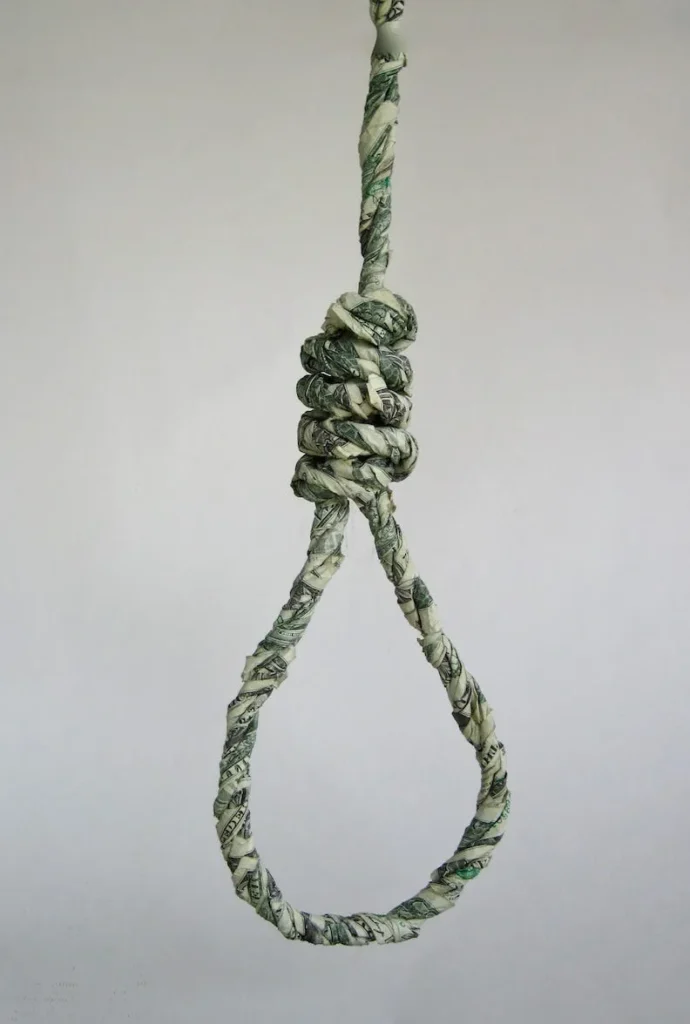
Chris Collins’ Sculpture symbolically captures the debt noose
Remittances—cash despatched dwelling by migrant employees—usually make up a big a part of creating nations’ GDP. Conventional intermediaries reminiscent of Western Union cost charges as excessive as 5–10%. This acts as a hidden tax that drains overseas reserves. For nations like El Salvador or Nigeria, each remittance greenback that doesn’t movement into the nation is a greenback their central financial institution should retailer to stabilize their currencies. Usually this retailer of US {dollars} is offered by the IMF.
1. Bitcoin Modifications the Sport
With Lightning, charges drop to nearly zero, and transactions settle in seconds. In 2021, El Salvador’s president Bukele optimistically predicted that bitcoin might save $400 Million in remittance payments. The fact has been there’s little proof remittance funds utilizing bitcoin have reached wherever close to that threshold. Nevertheless the potential is evident: extra remittances in bitcoin results in larger greenback reserves, which results in much less want for IMF loans.
Little marvel the IMF talked about Bitcoin 221 times of their 2025 mortgage circumstances for El Salvador. They’d like to stay a related lender.
Bitcoin isn’t simply cheaper for remittances—it bypasses the greenback system fully. In Nigeria, the place the naira struggles, households now maintain BTC as a more durable asset than native forex. No want for central banks to burn via greenback reserves. No determined IMF bailouts.
The numbers converse for themselves:
• Pakistan loses $1.8 billion yearly on remittance fees—Bitcoin might save most of that
• El Salvador already saves $4M+ yearly with simply 1.1% Bitcoin remittance adoption
Adoption isn’t common but—solely 12% of Salvadorans use Bitcoin repeatedly, whereas over 5% of Nigeria’s remittances movement via crypto. However the pattern is evident: each Bitcoin switch weakens the debt dependency cycle.
The IMF sees the risk. The query is: how briskly will this silent revolution unfold?”
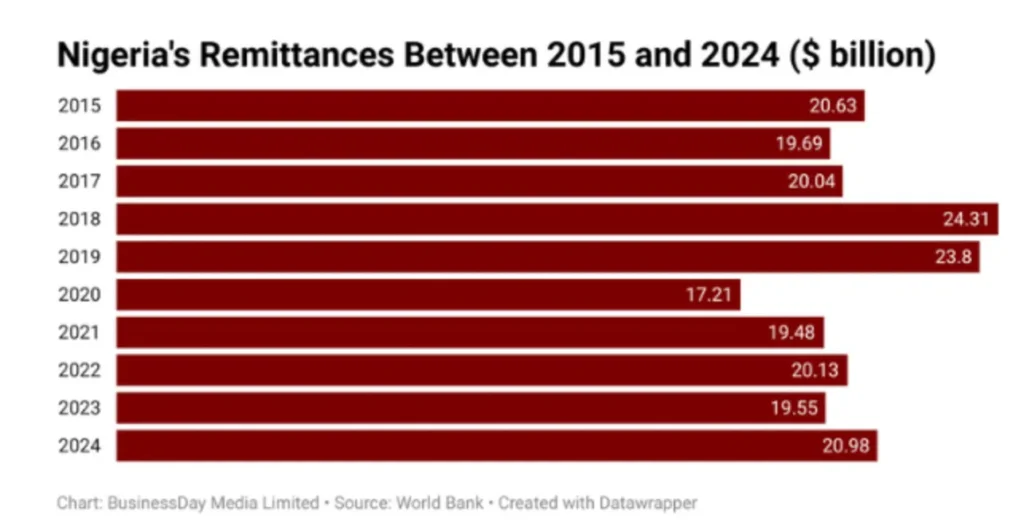
Remittances totaled nearly $21 billion in 2024, representing over 4% of Nigeria’s GDP
2. Evading Sanctions and Commerce Obstacles
Oil-rich Iran, Venezuela and Russia have had restricted USD entry resulting from US sanctions in 1979, 2017 and 2022 respectively, ensuing within the export of vastly fewer barrels per day of oil in every case.
Whether or not we agree with the ideologies of those nations or not, Bitcoin breaks this cycle. Iran already evades sanctions by using Bitcoin as a strategy to successfully “export oil”, whereas Venezuela has used Bitcoin to pay for imports, evading sanctions.
Iran can also be capable of bypass sanctions by monetizing its vitality exports through mining. This avoids the IMF’s “reform-for-cash” ultimatums whereas retaining economies working.
The petrodollar’s grip weakens as Russia and Iran pioneer Bitcoin oil offers.
One other nation that has used Bitcoin to keep away from the financial hardship attributable to sanctions is Afghanistan, the place humanitarian assist flows via utilizing Bitcoin. NGOs like Code to Inspire bypassed Taliban banking freezes, and Digital Citizen Fund have used Bitcoin to ship assist post-Taliban takeover, preventing families from starving.
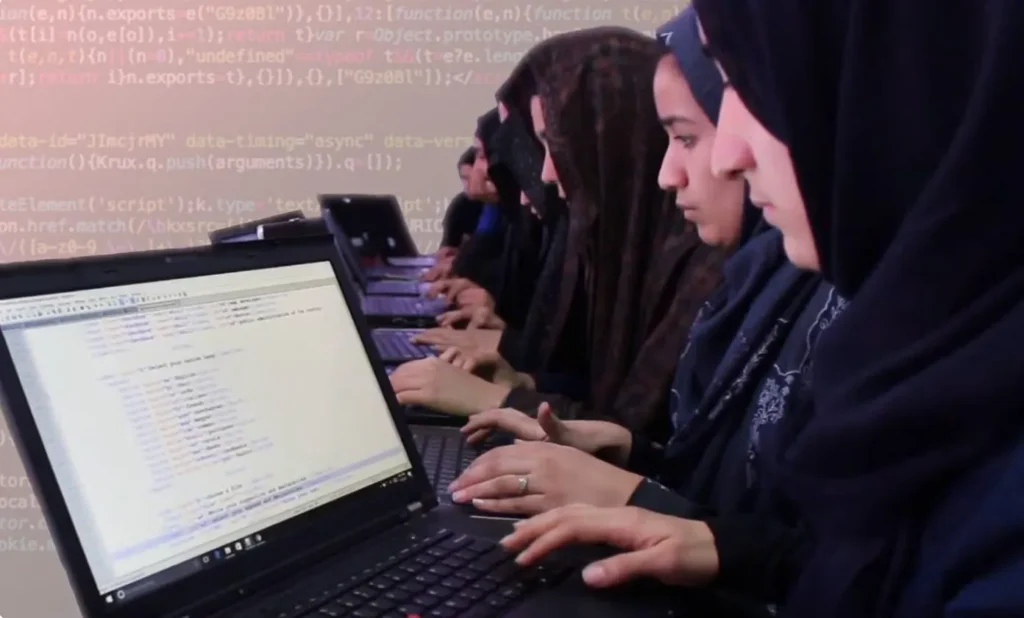
Afghanistan’s “Code to Inspire” NGO makes use of Bitcoin donations, which can’t be intercepted by the Taliban, to coach ladies to write down software program.
Although Bitcoin’s share of sanctioned commerce is small—below 2% for Iran and Venezuela’s oil exports—the pattern is rising.
Sanctions are a essential software for geopolitical leverage, usually supported by the IMF and World Financial institution via their alignment with main economies just like the U.S. Sanctioned nations utilizing Bitcoin reduces IMF management over monetary flows whereas concurrently threatening U.S. greenback dominance.
3. Utilizing Bitcoin as a Nation State Inflation Protect
When nations like Argentina face hyperinflation, they borrow USD from the IMF to bolster currency reserves and stabilize their forex, solely to face austerity or the enforced sale of strategic belongings at a low worth when repayments falter. Bitcoin provides a manner out by appearing as a worldwide, non-inflatable forex that operates independently of presidency oversight, and which appreciates in worth.
El Salvador’s experiment reveals how Bitcoin can reduce dollar dependency. By holding BTC, nations can hedge in opposition to forex collapse with out IMF loans. If Argentina had allotted simply 1% of its reserves to Bitcoin in 2018, it might’ve offset the peso’s 90%+ devaluation that 12 months, sidestepping an IMF bailout. Bitcoin’s neutrality additionally means no single entity can impose circumstances, in contrast to IMF loans that demand privatization or unpopular reforms.
Bitcoin doesn’t have debt-leverage or an extended historical past of the IMF to attract on when encouraging adoption. Nevertheless, because of the Lindy Effect (see chart beneath), every passing 12 months Bitcoin turns into a extra viable various.

Lindy Impact: The longer one thing has been profitable, the extra possible it’s to proceed being profitable. Bitcoin’s longevity strengthens its potential to disrupt
4. Bitcoin Mining: Turning Power into Debt-Free Wealth
Many creating nations are energy-rich however debt-poor, trapped by IMF loans for infrastructure like dams or energy crops. These loans demand low cost vitality exports or useful resource concessions when defaults hit. Bitcoin mining flips this script by turning stranded vitality—like flared gasoline or overflow hydro—into liquid wealth with out middlemen or transport prices.
Paraguay’s incomes $50 million yearly from hydro-powered mining, overlaying 5% of its commerce deficit. Ethiopia made $55 million in 10 months. Bhutan’s the standout: with 1.1 billion in Bitcoin (36% of its $3.02 billion GDP), its hydro-powered mining might produce $1.25 billion yearly by mid-2025, servicing its $403 million World Financial institution and $527 million ADB money owed with out austerity or privatization. Not like IMF loans, mined Bitcoin appreciates in worth and can be utilized as collateral for non-IMF borrowing. This mannequin—monetizing vitality with out surrendering belongings—scares the IMF, because it cuts their leverage over the vitality sector.

Bhutan’s Prime Minister, Tshering Tobgay, calls Bitcoin a “strategic choice to prevent brain drain”
5. Grassroots Bitcoin Economies: Energy from the Floor Up
Bitcoin isn’t just for nations—it’s for communities. In locations like El Salvador’s Bitcoin Beach or South Africa’s Bitcoin Ekasi, locals already use BTC for day by day transactions, financial savings, and neighborhood tasks like faculties or clinics. These round economies, usually sparked by philanthropy, intention for self-sufficiency. In Argentina, the place inflation usually tops 100%, 21% of people used crypto by 2021 to guard wealth. If scaled up, these fashions might cut back reliance on nationwide debt-funded packages, which is after all the very last thing the IMF need.
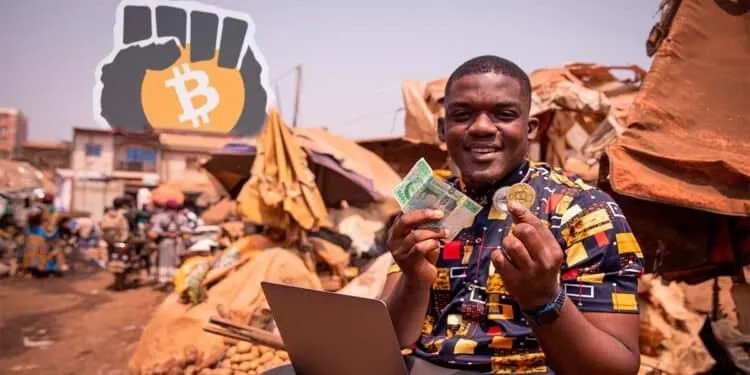
Hermann Vivier, founding father of Bitcoin Ekasi, says his neighborhood was impressed by El Salvador’s Bitcoin Seashore to duplicate their Bitcoin round economic system in S.Africa
Conclusion
By fostering native resilience, Bitcoin undermines the IMF’s “crisis leverage”. Thriving communities don’t want bailouts, so the IMF can’t demand privatization in alternate for loans. In Africa, tasks like Gridless Energy’s – which has already introduced 28,000 rural Africans out of vitality poverty utilizing renewable microgrids tied to Bitcoin mining – lower the necessity for IMF-backed mega-projects. If hundreds of cities undertake this, greenback shortages would matter much less, and commerce might bypass USD programs.
Whereas the IMF often engages in spreading misinformation about Bitcoin vitality consumption and environmental affect as a strategy to impede adoption, its most well-liked and far more highly effective software is just to make use of the monetary leverage it has over IMF-indebted nations to “strongly encourage” compliance with its Bitcoinless imaginative and prescient of the longer term.
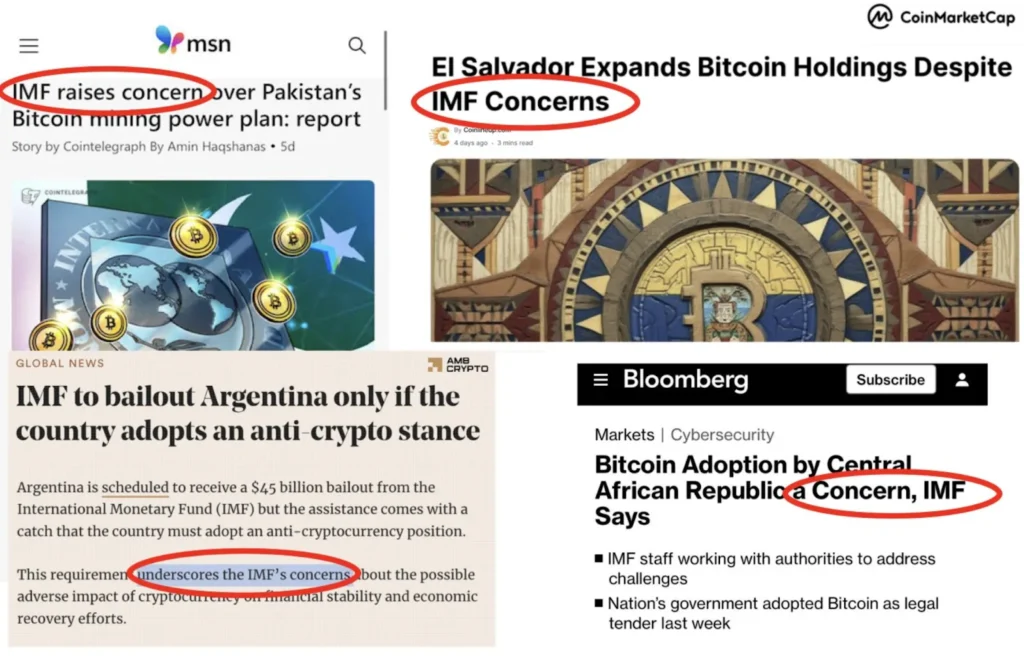
The IMF fought Bitcoin adoption in El Salvador, CAR, and Argentina. Now they’re combating Pakistan’s intention to mine Bitcoin as a Nation State. Scaling these grassroots efforts is more likely to power the IMF’s hand to crack down increasingly more transparently.
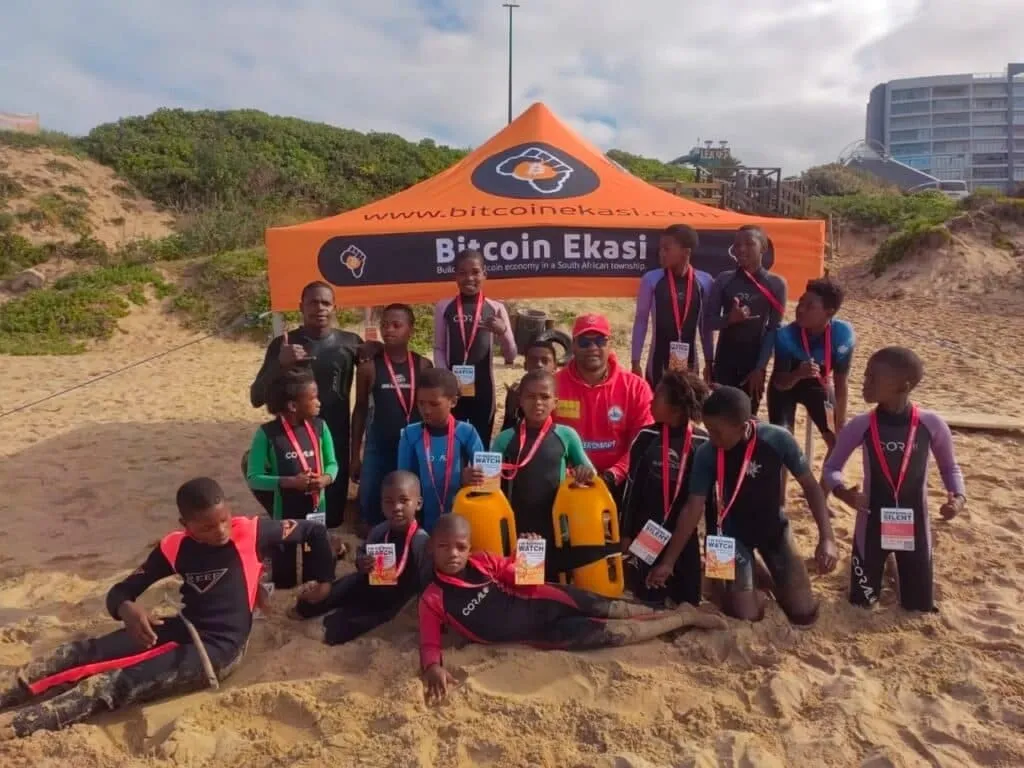
Above: Kids from South Africa’s poorest villages study to surf through the Bitcoin Ekasi township mission
Grassroots Bitcoin economies empower communities to thrive with out IMF bailouts. And other people-power is required to seek out new revolutionary methods to beat the IMF’s counterpunch.
It is a visitor put up by Daniel Batten. Opinions expressed are fully their very own and don’t essentially replicate these of BTC Inc or Bitcoin Journal.
“DagelijksCrypto is not responsible for any activities you perform outside DagelijksCrypto.”


